

Grief Sensitivity Training
Overview
Making funeral arrangements can be stressful - particularly for those who deeply mourning. This training was designed for funeral professionals to help them navigate interactions with grieving clients with empathy, respect, and emotional awareness. This scenario-based learning module equips learners with helpful tools to recognize common grief responses and respond supportively.
-
New and seasoned funeral home employees - particularly customer-facing roles.
-
Instructional Design, eLearning Development, and SME collaboration
-
Articulate 360
Problem & Solution
Employees of funeral homes interact daily with grieving families and individuals experiencing loss. While they provide essential logistical and emotional support, many employees may not have formal training in grief sensitivity. This lack of training can lead to unintentional insensitivity, discomfort in navigating emotional interactions, or burnout due to emotional strain. Studies suggest that professionals working with grieving individuals benefit from grief education to improve communication, empathy, and self-care. Additionally, different situations require different approaches to grief sensitivity. Things like culture, reason for loss, financial situation, and more change how the situation should be approached.
The goal of this module is to equip funeral home employees with the skills and knowledge to effectively support grieving individuals. The desired change includes:
Behavioral Change: Employees will adopt best practices for compassionate communication, active listening, and recognizing the diverse expressions of grief.
Skill Development: Participants will learn strategies for responding to emotional distress, maintaining professional boundaries, and practicing self-care to mitigate compassion fatigue.
Attitude Shift: Employees will develop greater confidence and empathy when assisting grieving individuals, fostering a more supportive and understanding environment.
Meet Bradley.
The subject matter of this topic is niche and there isn’t quality anecdotal information readily available. Bradley has almost 30 years of experience in the funeral industry. He got his mortuary license and did the majority of his practice in California, where he served a diverse client-base; catering to many different cultural, religious, and geographical traditions.
His insights and experiences that he shared helped to shape the tone, credibility, and structure of the training. He was an excellent resource as an SME (Subject Matter Expert) and helped me address sensitive topics with care and credibility.

Task Analysis
The SME helped me to piece together the things a mortuary professional will handle on a day-to-day basis, as well as the knowledge and skills they possess. This helped me to identify the best scenarios to curate a more personalized learning experience.
-
On a regular basis, the target learner for this training will:
Handle cremation or burial decisions.
Manage obituaries and death certificates
Guide families through merchandise options (caskets, urns, etc.)
-
The target learner will has:
An understanding of the entire funeral process (legal, procedural, emotional)
Knowledge of local/state/federal funeral regulations
Familiarity with consumer protection laws related to funeral services
Awareness of cultural and religious differences in funeral practices
-
Skills the target learner possesses are:
Communication skills for sensitive conversations
Gathering accurate information for legal documents
Presenting service and merchandise options clearly
Professionalism and empathy

Fictitious Learning Persona: Pearl E. Gates
Pearl is a funeral home receptionist. I decided to use Pearl as my point of reference because she hasn’t had formal training in grief sensitivity, but is the first point of contact for grieving families looking to make arrangements for their loved ones. She represents a critical, yet overlooked, learner group.
Here’s a little about her:
Age: 32
Occupation: Funeral Home Receptionist
Education: Associate’s Degree in Business Administration
Previous Work Experience: 5 Years in administrative roles, 2 years at a local funeral home.
Some barriers to her learning could be fear of saying the wrong thing when faced with a very distressed client, the emotional toll speaking with families in distress can cause, or even limited time for training due to her busy work day with her administrative duties.
Pearl’s success indicators are that she can feel more confident handling difficult conversations, can identify different types of grief response and adjust communication according, use active listening and empathy to support families while maintaining professional boundaries, and reports lower stress levels related to emotionally challenging interactions.
Goals & Objectives of the Training
Knowledge: After completing this training session, learners will develop a comprehensive understanding of the funeral arrangement process, including legal requirements and regulations.
Skill: After completing this training session, learners will effectively demonstrate communication skills required for collecting information and completing funeral arrangements.
Emotional/Professional: After completing this training session, learners will demonstrate professionalism and empathy while interacting with grieving families.
Text-Based Activity Storyboard
We recognized the most crucial part of this training was going to be to help learners improve their communication skills and to be more intentional in their interactions with their clients. In the training, you’ll see many role-play scenarios and opportunities for the learner to personally reflect on their current knowledge, as well as opportunities to follow-through with their learnings.
Through research with the SME, were able to emulate realistic conversations with opportunity for the user to respond.
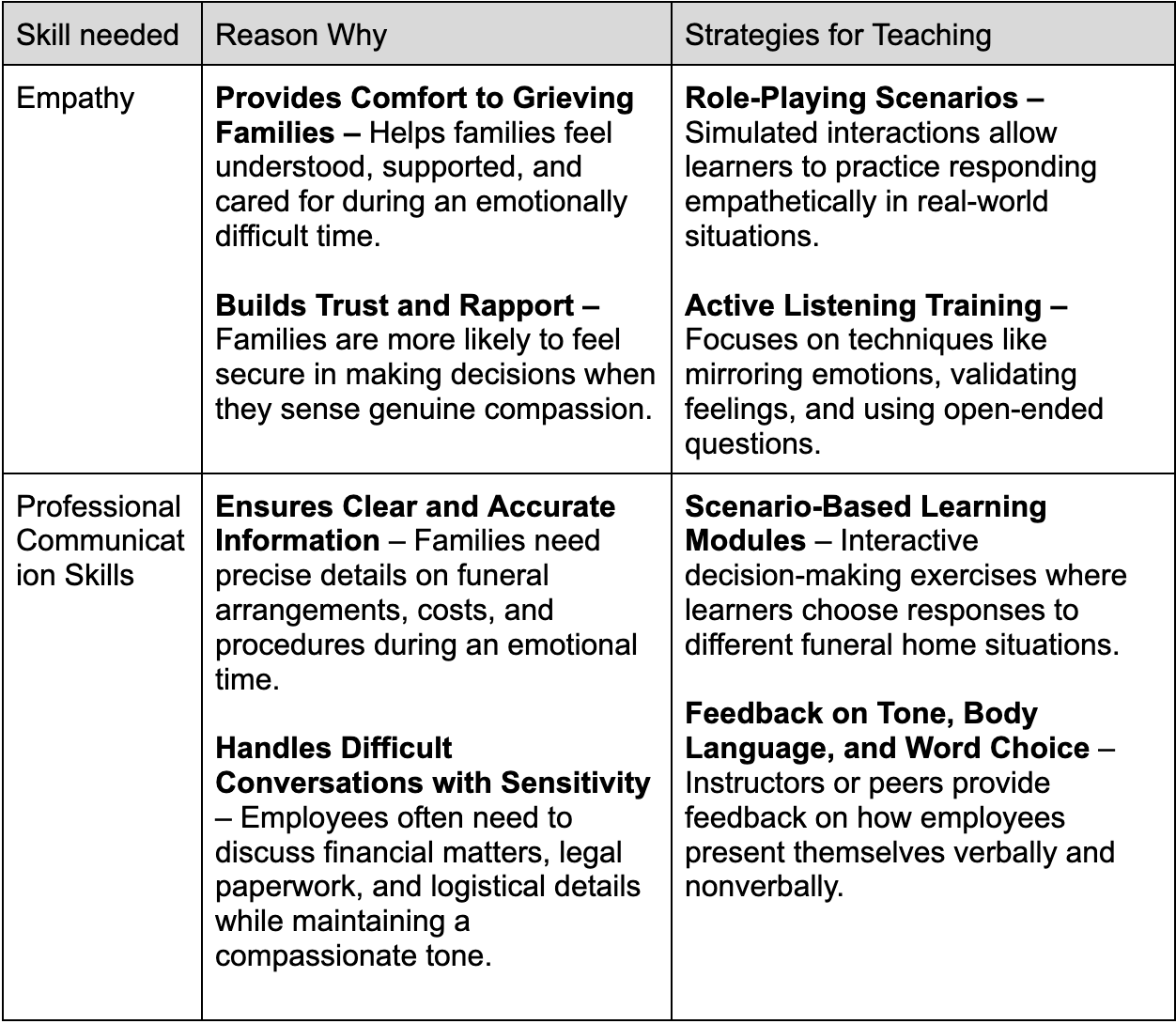
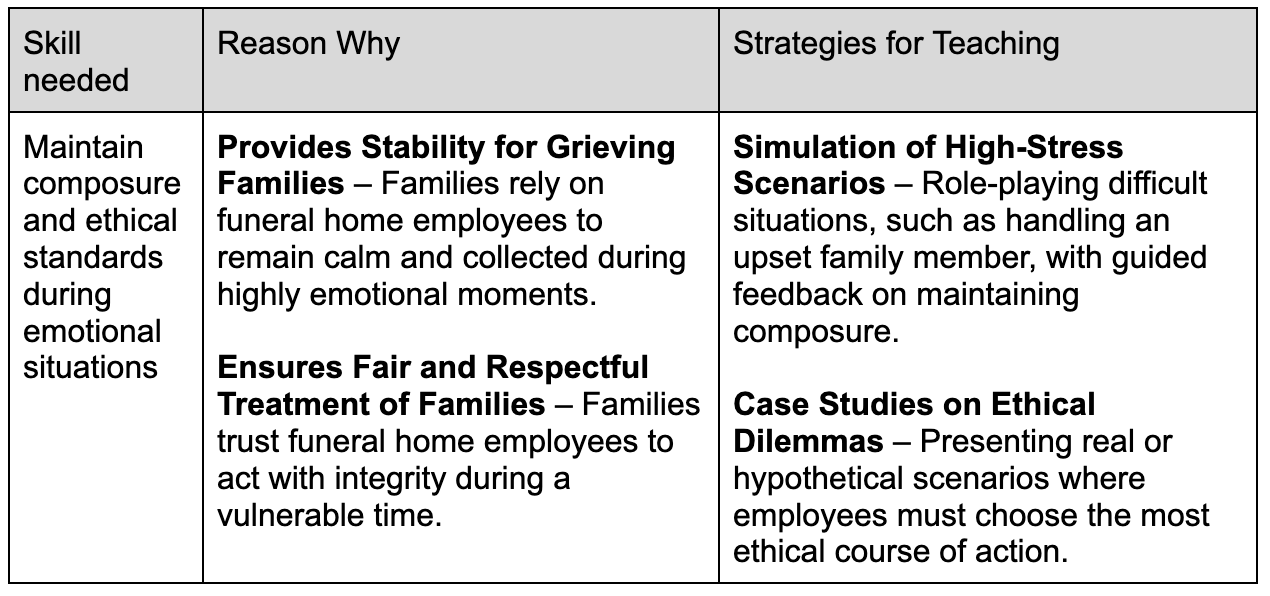
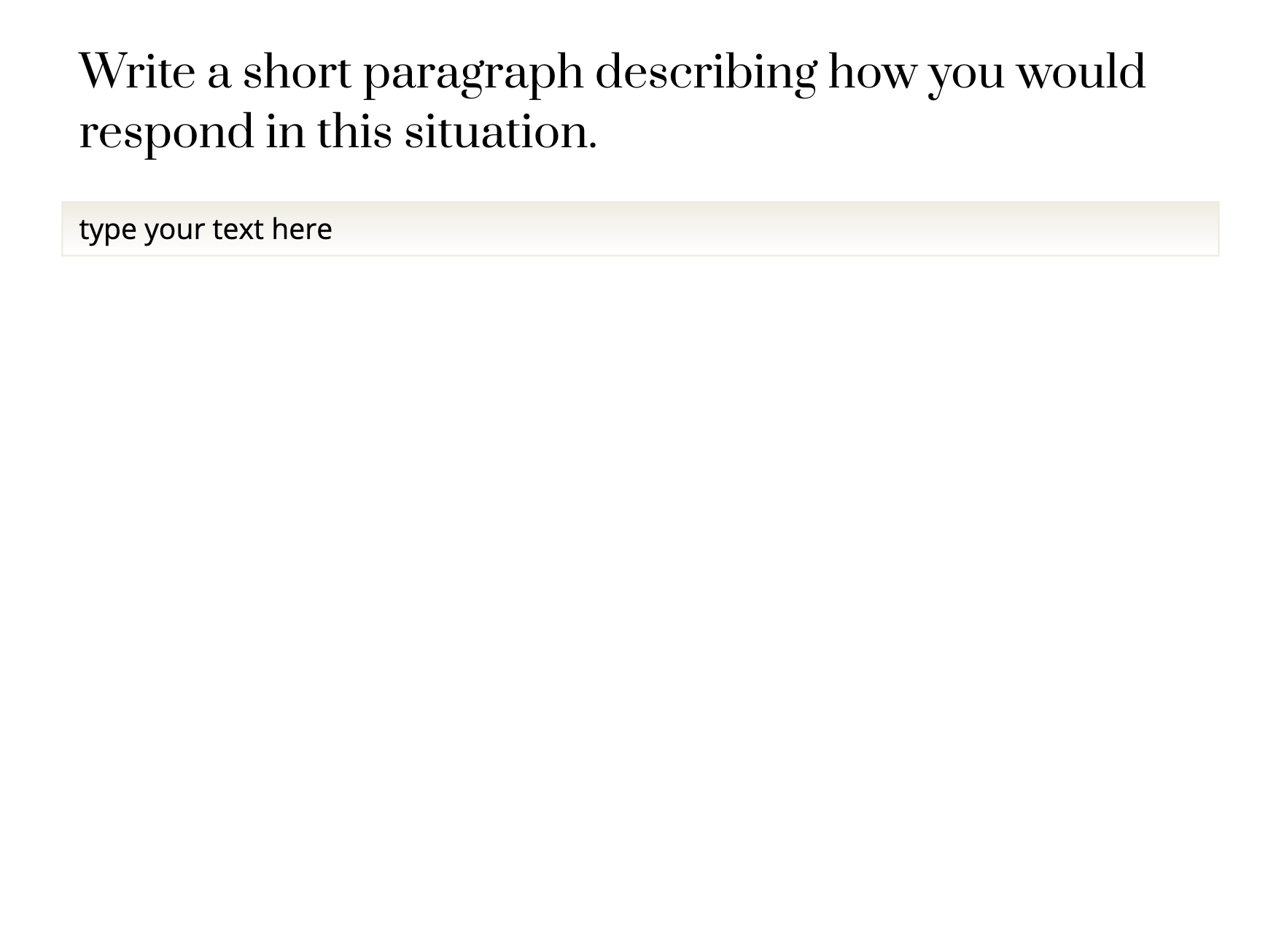
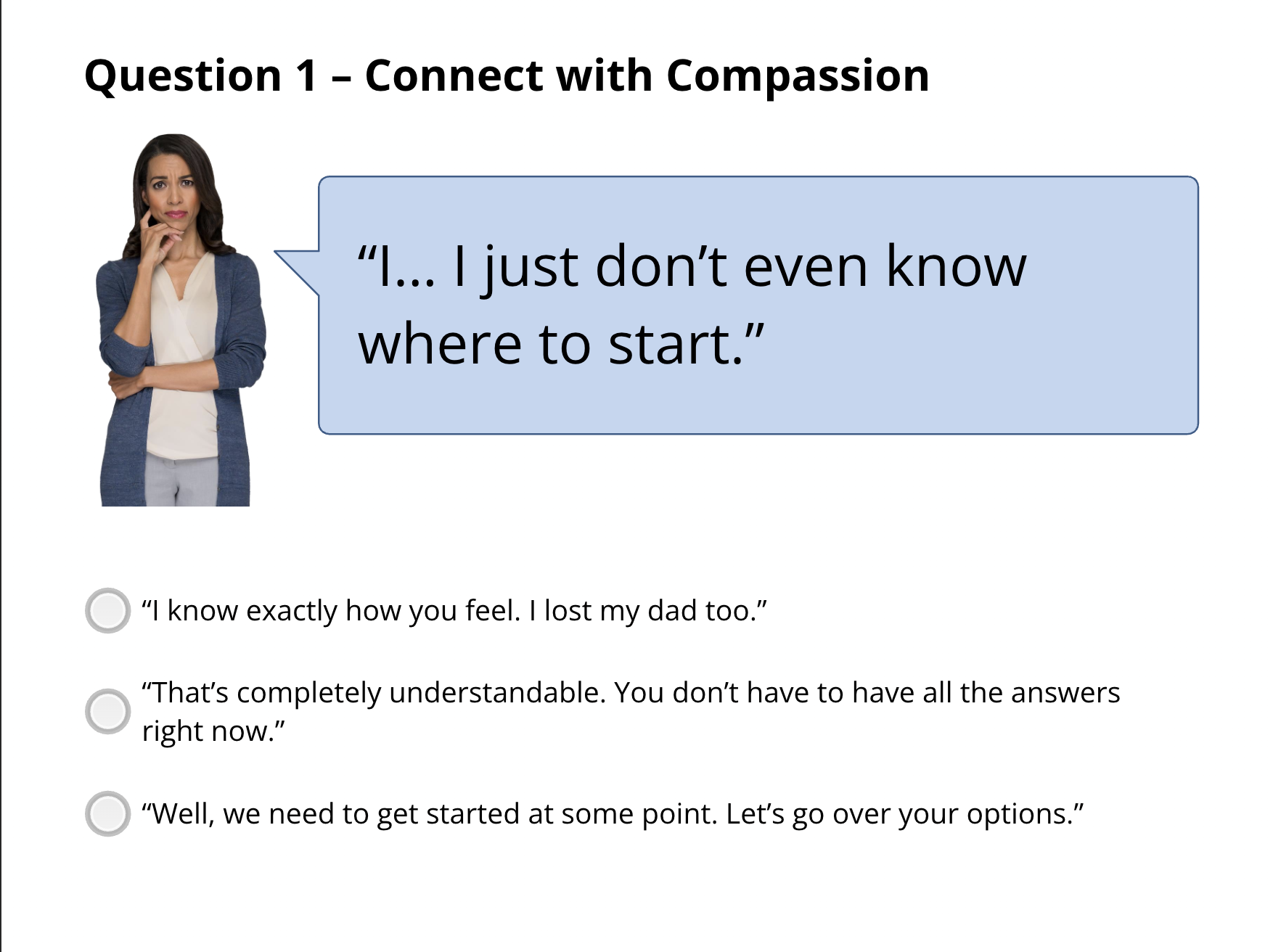
I based the content to follow the C.A.R.E model: Connect with Compassion, Assess Their Needs, Respond with Respect, and Encourage Small Steps. To assess the learner’s knowledge, each question puts each aspect of the C.A.R.E model to practice.
Final Thoughts.
This training was built to empower client-facing mortuary professionals – regardless of their background and experience in the industry. Grounded in a learner persona that represents the often-overlooked frontline staff, the training prioritizes clarity, compassion, and practical application.
By taking a human-centered approach, I was able to create a resource that not helps the clients to not feel like they’re being “sold” something or that they’re just a number, but also supports employee well-being.
I believe this project specifically highlights my ability to create a thoughtful and inclusive learning solutions that make a real-world difference.